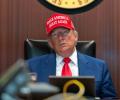
'What the Americans want is to destabilise Iran. For destabilising Iran, you need access. 'One access is through Iraq. The other access is through Pakistan.'

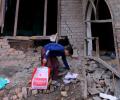
On Wednesday, dentist Dr Mudasir Gul's widow, carrying her 18-month-old child in her arms, wept and angrily demanded evidence that her husband -- who was slain during a firefight between security forces and terrorists in Hyderpora, Srinagar, on Monday evening -- was an over the ground worker.

'We will take all necessary steps to ensure that Abir Gulaal is not released in India.'

Tharoor said his remarks were preceded by a reference to the several attacks that have taken place in recent years alone, during which previous Indian responses were both restrained and constrained by India's responsible respect for the LoC and the IB.

'The lesson Beijing would have learned is that there is, cost-benefit wise, no better option than to keep the Pakistan military supplied with its most advanced armaments, certain that in hostilities with India these would be used for maximum effect.'

Villagers living near the International Border and Line of Control in Jammu are on high alert following the recent terror attack in Pahalgam, preparing underground bunkers and accelerating crop harvesting. The incident has heightened security concerns despite a renewed ceasefire agreement between India and Pakistan in 2021. Residents are demanding swift action against the perpetrators and their handlers.

He said Prime Minister Narendra Modi has made it "very clear" that any talks with Pakistan will be only on terror.

Amid Indian strikes, PCB in huddle to decide whether PSL should continue

This was for the second time in the past six years that Hussain, who also worked for an intelligence unit of the Pakistani army, was arrested while trying to infiltrate into this side from across the border.
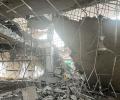
Indian Air Force S-400 Sudarshan Chakra air defence missile systems were fired last night against targets moving towards India. The targets were successfully neutralised in the operation multiple domain experts told ANI.
Amid escalating tensions between India and Pakistan, the US has said it will not get involved in the conflict, stressing that it is "fundamentally none of our business." While acknowledging concerns about a potential nuclear war, Vice President J D Vance emphasized that the US cannot control India and Pakistan, but can encourage them to de-escalate. The US has also reiterated its support for direct dialogue between the two countries and encouraged efforts to improve communications.

The Congress party launched a scathing attack on the central government regarding the Pahalgam terror attack and Operation Sindoor, demanding accountability from Home Minister Amit Shah and clarification on the number of Indian jets downed during the operation.

Over 75 government employees with terror links have been dismissed so far by the LG administration.
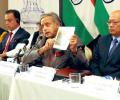
Tharoor, who is leading the all-party delegation to the Americas during his Bogota visit, had expressed dismay over the South American country's stance during a press conference on Thursday.
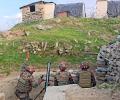
'With a military-led strategy to counter terrorism emanating from Pakistan, India has clearly signalled that it would respond decisively to future terrorist threats.'
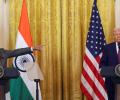
Prime Minister Narendra Modi spoke with President Donald Trump and set the record straight that India had paused strikes on Pakistan during Operation Sindoor following a request from Islamabad and not due to mediation or offer of a trade deal by the United States.
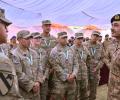
'Trump's sons, and the son of Trump's Mideast envoy Steven Witkoff, are in the crypto business and recently signed deals with Pakistan's crypto council.' 'It may not be coincidental that not long before the Trump-Munir meeting, the head of Pakistan's crypto council met with Trump's White House crypto policy czar.'

The closed-door luncheon meeting came amid escalating tensions between Israel and Iran with Trump exploring Washington's possible involvement.
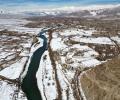
India has asserted that the Indus Waters Treaty with Pakistan will remain in "abeyance" until Islamabad "credibly and irrevocably" abjures support to cross-border terrorism. External Affairs Ministry spokesperson Randhir Jaiswal said that any bilateral talks with Islamabad will only be on vacation of illegally occupied territories of Kashmir by Pakistan. He also said that India is open to discussing the handing over of terrorists whose list was provided to Pakistan some years ago. India on April 23 announced a raft of punitive measures against Pakistan including suspension of the Indus Waters Treaty after the Pahalgam terror attack that killed 26 civilians.
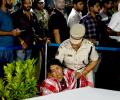
The ISI strategy has been to use its proxies to target Hindus in India. They want an outrage and counter-targeting of India's minorities. Further, even the whiff of it restores the Pakistan army's popularity, especially when it's in the dumps, like now, points out Shekhar Gupta.
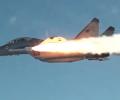
The Directors General of Military Operations of India and Pakistan firmed up the arrangement on stopping military actions on May 10 after four days of fierce offensives between the two sides that triggered fears of a wider conflict.
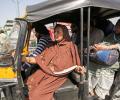
The exit deadline for Pakistani nationals visiting India on SAARC visas ended on April 26, while for the rest, except those on medical visas, it is set to close on Sunday, April 27 amid escalating tensions between the two countries over the Pahalgam terror attack that killed 26 people.

With this decision, the government headed by Prime Minister Narendra Modi has sought to draw a red line against terror incidents and makes clear that it will follow a similar military response as it has after the Pahalgam incident if terrorists linked to Pakistan target India again.

The entire impact of Trump's tariff policies over the last six months or so has taken the whole world back, and India too had a bit of a jolt just two to three days ago, Tharoor said.
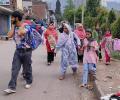
'Five hours of bombardment by the Pakistanis should not have happened.' 'India should have sent the air force to bomb the Pakistanis where they were raining fire on us.'

National Security Advisor Ajit Doval on Monday emphasised the need to counter terrorism in all its forms for overall regional peace and stability during a meeting with Chinese Foreign Minister Wang Yi in Beijing.
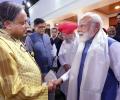
Prime Minister Narendra Modi's energy, dynamism and willingness to engage remains a 'prime asset' for India on the global stage but deserves greater backing, Congress MP Shashi Tharoor said on Monday, in remarks that are likely to irk his party and widen the growing cracks in his ties with its leadership.
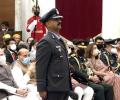
Major Syed Moiz Abbas Shah, 37, was killed on Tuesday in a clash with the Taliban militants in the Sararogha area of South Waziristan near the Afghan border, according to a statement by the Inter-Services Public Relations (ISPR), the media wing of the army.
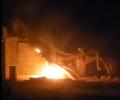
The nine targets struck under 'Operation Sindoor', four in Pakistan and five in Pakistan-occupied-Kashmir, were chosen by the IAF after receiving intelligence inputs about terror camps operating under the guise of health centres to evade detection at these sites, officials said on Wednesday.
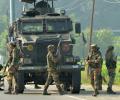
The search operation turned into an encounter after the terrorists fired upon the security forces who retaliated, he said.
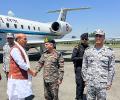
Defence Minister Rajnath Singh on Thursday questioned the safety of nuclear weapons in the hands of Pakistan, and said they should be taken under monitoring of the International Atomic Energy Agency.
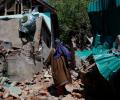
Authorities in Kashmir have launched a massive crackdown on terrorists and their sympathisers in the aftermath of the Pahalgam terror attack, razing homes of the ultras, raiding their safe havens and detaining hundreds of overground workers for questioning, officials said on Saturday.

Congress leader Udit Raj criticized party colleague Shashi Tharoor for his reported remarks that India breached the Line of Control (LoC) for the first time during the 2016 surgical strike on a terror base, saying he should be declared a "super spokesperson of the BJP". Raj argued that India had crossed the LoC in 1965 and 1971, and that the UPA government had also conducted surgical strikes. Tharoor had reportedly said that India breaching the LoC to conduct a surgical strike was "something we had not done before". This is not the first time Raj has criticized Tharoor for his comments on India-Pakistan relations. Last month, Raj had hit out at Tharoor for his reported "no country has 100-per cent foolproof intelligence" remarks, questioning how Tharoor could be giving the BJP a "clean chit" on the Pahalgam terror attack. Tharoor had hit back at Raj, saying the latter is a former BJP MP and "is better qualified to understand who speaks for the BJP".

The post further read that "at a moment of heightened regional turbulence", President Trump "demonstrated great strategic foresight and stellar statesmanship through robust diplomatic engagement with both Islamabad and New Delhi," Dawn reported.
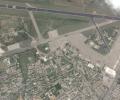
'We do not want to fall into a trap of uncontrolled escalation or all out conflict.' 'When the need arises we will do that.'

John Spencer, the chair of Urban Warfare Studies at US-based think-tank Modern War Institute, said India showcased its ability to strike any target in Pakistan "at will" and drew and enforced a "new red line" for cross-border terrorism under the operation that was launched early on May 7.

Following a deadly terror attack in Pahalgam, India has ordered all Pakistani nationals to leave the country within 48 hours. This has led to a mass exodus of Pakistani citizens from India, while several women married to Pakistani nationals and holding Indian passports are facing difficulties returning to their families in Pakistan.
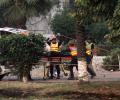
Since the Pahalgam terrorist attack, China, Pakistan's "ironclad ally", while condemning it, has called for restraint, besides a fair and swift investigation into the attack.

'India for its survival has to change its doctrine from no first use to a pre-emptive attack in case of any hostile move by Pakistan,' recommends Colonel Anil A Athale (retd).

External Affairs Minister S Jaishankar has informed a parliamentary panel that Pakistan was notified about Indian strikes on terror camps in their territory only after they were carried out. He also clarified that the decision to halt the military operation was taken bilaterally following a request from Pakistan, and there was no US mediation involved. Jaishankar emphasized India's zero-tolerance policy against terrorism and the importance of conveying a united message against it globally.
